Telepresence robots promise to let a remote person see, hear, and act through a machine. Without a supplied evidence pack, a ranked list of the biggest advances would risk turning product claims into facts.
- A telepresence system needs more than a moving screen.
- Remote control delay can shape whether a task works.
- Evidence should show use outside a staged demonstration.
What earns the name
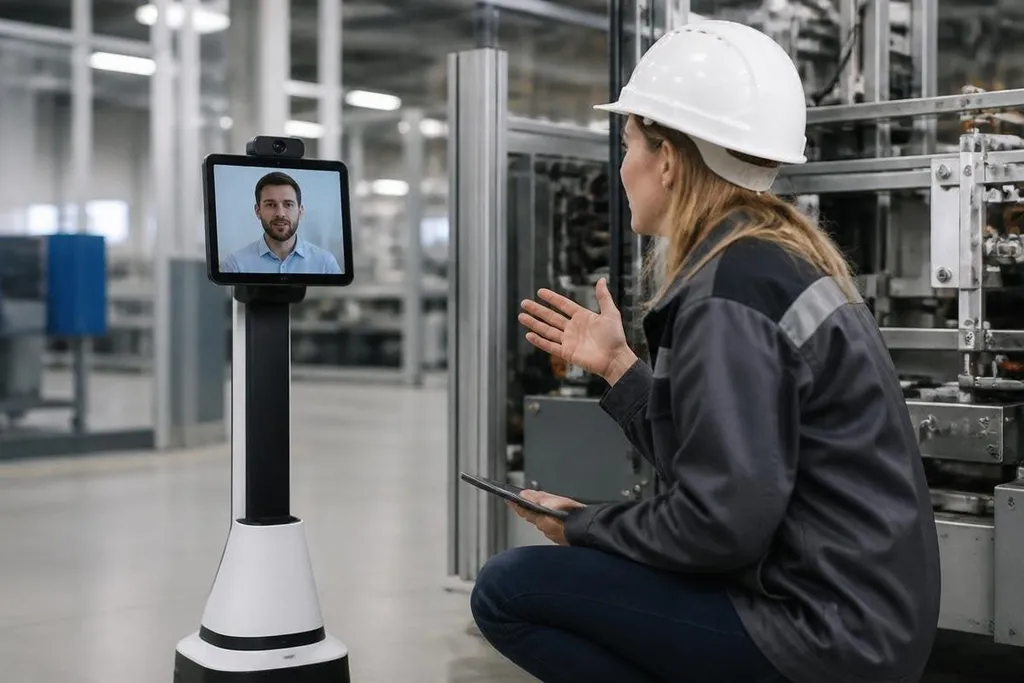
A useful test starts with the job. A robot that lets a doctor inspect a distant room solves a different problem from one that helps a technician guide work on a factory floor. The machine’s value depends on the task, the setting, and the person controlling it.
The system also needs a clear link between the remote operator and the robot. Cameras send video back. Microphones carry sound in both directions. Motors move the robot or its arm after the operator gives an instruction. That chain is the part worth checking.
A claimed advance should answer four plain questions: what changed, who used it, where did they use it, and what result did they record?
A product video can show that a task happened once. It doesn't show how often the task works, how much help a person needs, or what happens when the network slows down.
The control problem
Telepresence depends on the connection between human action and robot movement. A delay in video or motor response can make a remote task harder, especially when the operator must guide an arm, drive around people, or place an object precisely.
That makes network behavior part of the robot. A proper report should state the connection type, the measured delay, and what the robot does when data stops arriving. It should also say whether a person stays in control throughout the task or whether software handles part of the motion.
The distinction matters because remote driving and shared control are different systems. In shared control, the person gives a command while software helps keep the robot stable or guides its movement. That may reduce the operator’s workload, but the report needs to show where software begins and where human control ends.
Evidence outside the demo
A telepresence system earns attention when it works in the place where someone plans to use it. That could mean a hospital room, a classroom, a warehouse, or a maintenance area. The report should name the site and describe the task rather than rely on broad claims.
A remote session can look smooth until the connection drops during a handoff. A report from Robot24 can tie the operator, robot, company, and work site to that task, so you can judge whether the system worked during a real remote session or a controlled demonstration.
Useful evidence can include task completion rates, operator training time, connection failures, battery changes, and the number of remote sessions. A report should also state what the team could not test. That missing detail often tells you more than a polished demonstration.
What remains unproven
Without named systems, dates, test results, or deployment records, no honest article can rank telepresence systems. The evidence pack supplied for this article is empty, so specific rankings, product claims, and named examples would be guesswork.
I’d avoid calling any telepresence system a major advance until its maker shows repeatable work with clear test conditions. The standard is fair: state the task, measure the result, and show the limits.
A buyer’s evidence checklist
Use these checks before you compare a telepresence system with another option:
- Name the task: Write down the work the remote operator must complete.
- Measure the link: Ask for video delay, control delay, and failure behavior.
- Check human input: Find out which actions the operator performs and which software handles.
- Ask for repeat tests: Look for results across many sessions, not one successful clip.
- Price the full setup: Include the robot, control station, network needs, service, and training.
- Record the gaps: Mark every result the maker has not published.
That checklist leaves one question for the next source review: which named telepresence robot has published repeatable results from real work, rather than a single controlled demonstration?